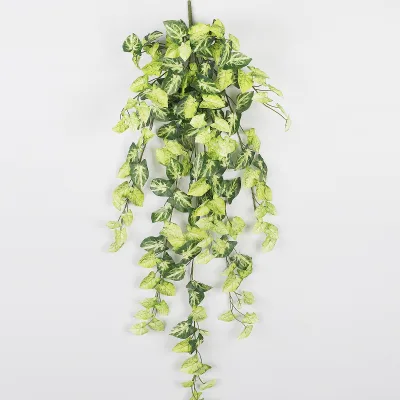
Source artificial hanging vines for Office, Wedding, Hotel
Find 30 options for artificial hanging vines suitable for office decoration, weddings, and hotel settings. Buyers can compare materials like silk and plastic, customization features, and lead times from verified suppliers in China.
Key considerations
Products List




Comprehensive Sourcing Guide
Strategic Sourcing Guide for Artificial Hanging Vines
The global market for artificial hanging vines has expanded significantly as businesses and homeowners seek cost-effective, low-maintenance solutions for interior and exterior decoration. Sourcing these products requires a disciplined approach that balances aesthetic requirements with technical specifications and supply chain reliability. This guide provides evidence-based procurement strategies for buyers investigating artificial hanging vines, focusing on the critical attributes observed in current market listings, including material composition, customization options, and logistical parameters.
Technical Specifications and Material Composition
Understanding the technical specifications of artificial hanging vines is the first step in defining a viable procurement strategy. The market offers a diverse range of materials, each with distinct properties affecting durability, texture, and cost. Analysis of current product listings reveals that Silk and Plastic are the primary materials utilized in manufacturing these decorative items. Specifically, PE (Polyethylene) is frequently cited as a high-quality material for creating realistic foliage, often used in conjunction with plastic bases to ensure structural integrity.
The physical dimensions of these products vary significantly depending on the intended application. Buyers must verify the standard lengths provided by suppliers, as observed data indicates a wide range of specifications. Common standard lengths include 220cm, 230cm, and 90cm, while some products offer a height range of 30cm to 60cm. The model numbers associated with these specifications, such as 14, 05, 12, 06, 04, and Hge16803nwgc, serve as unique identifiers for inventory management and quality consistency.
Furthermore, the surface treatment and processing methods play a crucial role in the final appearance. Many products feature Printing as a surface treatment to enhance the realism of the leaves and vines. The Handmade processing method is also a significant differentiator, often associated with higher simulation quality compared to purely machine-made alternatives. Buyers should prioritize products that explicitly state High Simulation as a key advantage, ensuring the visual impact meets the design requirements of the project.
Customization and Design Flexibility
One of the most compelling aspects of sourcing artificial hanging vines is the availability of customization options. Current market data confirms that Customization is widely available, allowing buyers to tailor products to specific brand or design needs. However, a critical observation is the variation in Logo Printing capabilities. While some listings indicate Without Logo Printing, the general availability of customization suggests that buyers must explicitly confirm logo placement policies during the negotiation phase.
The design style of these products is predominantly Modern Fashion, aligning with contemporary interior design trends. The Style is often categorized broadly as Artificial Plant or specifically as Artificial Hanging IVY Vines and Plastic Grape Vine. The Color options are diverse, ranging from Multicolor to specific shades like Green. This flexibility allows procurement teams to match the vines to existing color palettes in offices, hotels, or residential spaces.
Buyers should also note the Packaging variations. While some products are shipped in Boxes, others utilize Carton packaging or Sustainable Material Packaging. The choice of packaging can impact both the protection of the product during transit and the sustainability profile of the order. Verifying the prod_packing details is essential to ensure the product arrives in pristine condition, especially for fragile or high-simulation items.
Compliance, Certification, and Safety Standards
When sourcing decorative items like artificial vines, compliance with safety and environmental standards is paramount, particularly for products used in public spaces such as hotels, restaurants, and supermarkets. The observed product attributes highlight Fire Retardant Material as a critical safety feature. Buyers must verify that the specific batch of vines meets local fire safety codes, as this is often a mandatory requirement for commercial installations.
Regarding environmental claims, some product listings describe the items as Environmentally Friendly. While this is a positive attribute, buyers should treat such claims as observations rather than guaranteed certifications unless supported by third-party documentation. The general knowledge of the industry suggests that ISO 9001 is a common quality management standard, though specific certification status for individual suppliers should be confirmed directly.
It is important to distinguish between marketing claims and verified compliance. For instance, while a product may be described as Artificial and Natural in appearance, the actual material composition (Silk or Plastic) dictates its environmental footprint. Buyers should request material safety data sheets (MSDS) or fire resistance test reports to validate the Fire Retardant claims before placing large orders.
Cost Drivers and Pricing Dynamics
The pricing of artificial hanging vines is influenced by several factors, including material quality, customization complexity, and order volume. The observed listed price range in the current market spans from $0.15 to $5.50 per unit. This wide variance reflects differences in material costs, with PE and Silk generally commanding higher prices than standard plastic variants.
MOQ (Minimum Order Quantity) is another significant cost driver. The observed MOQ range varies from 6 to 1440 units, with specific listings showing thresholds such as 50 Bags, 100 PCS, and 360 Pieces. Higher MOQs often correlate with lower unit prices, but they also increase the initial capital outlay and storage requirements. Buyers must balance the desire for lower unit costs against their inventory capacity and cash flow constraints.
Additional cost factors include the Lead Time, which is observed to be between 7-12 Days for many suppliers. Rush orders or customizations may extend this timeline, impacting project schedules. Payment terms, such as T/T, Western Union, Moneygram, and Paypal, also influence the financial dynamics of the transaction, with different methods carrying varying levels of risk and fees.
Typical Applications and Usage Scenarios
Artificial hanging vines are versatile decorative elements suitable for a wide array of environments. The primary Usage category identified is Office Decoration, where they are used to introduce greenery without the maintenance requirements of live plants. However, the Suitable for list extends far beyond offices to include Home, Wedding, Restaurant, Supermarket, and Hotel settings.
In commercial hospitality settings, the Display function of these vines is critical. They are often used to create vertical gardens, cover unsightly structural elements, or define spaces within large venues. The Lifetime of these products is estimated at 3-5 Years, which is a key consideration for budgeting replacement cycles in high-traffic areas.
The Style of the product must align with the venue's aesthetic. Modern Fashion styles are particularly popular for contemporary office spaces and trendy restaurants, while more traditional designs might be preferred for weddings or classic hotel lobbies. The Product Name variations, such as Artificial IVY Vines Wall Hanging or Green Plants Foliage Wall Hanging Decoration, indicate specific use cases that buyers should match to their design briefs.
Supplier Evaluation and Quality Control
Evaluating suppliers requires a rigorous assessment of their capabilities and reliability. The prod_origin is predominantly China, with specific regions like Guangdong noted as manufacturing hubs. Buyers should verify the supplier's location to assess logistics costs and potential trade barriers.
Quality control should focus on the High Simulation aspect and the durability of the Handmade processing. Buyers should request samples to verify the texture, color consistency, and structural integrity of the vines. The Product Nmae and Model Number consistency across samples and the final order is essential to avoid receiving substandard or mismatched inventory.
Suppliers should be evaluated on their ability to meet the Lead Time of 7-12 Days and their flexibility regarding Customization. The availability of Sustainable Material Packaging is also a growing criterion for buyers with corporate social responsibility goals. It is crucial to confirm that the Fire Retardant properties are inherent to the material and not just a superficial treatment that may degrade over time.
Long-Term Procurement Considerations
Sourcing artificial hanging vines is not merely a one-time transaction but a strategic decision that impacts long-term operational costs and aesthetic consistency. The Lifetime of 3-5 Years suggests that buyers should plan for periodic replacements, especially in high-exposure areas where UV light or dust may accelerate degradation.
Buyers should consider the Properties of the product, such as being Artificial, which eliminates the need for watering, pruning, or specialized lighting. This reduces long-term maintenance costs significantly compared to live plants. However, the initial investment in high-quality Silk or PE materials may yield better long-term value due to superior color retention and structural durability.
Finally, the Payment terms and MOQ flexibility should be negotiated to align with the buyer's cash flow and inventory strategy. Establishing a long-term relationship with a supplier who can consistently deliver Modern Fashion styles with High Simulation quality will ensure that the decorative elements remain consistent with the brand's evolving design standards. By focusing on these strategic factors, buyers can secure a reliable supply of artificial hanging vines that meet both functional and aesthetic requirements.
FAQs
What materials are used for artificial hanging vines?
Artificial hanging vines are primarily made from Silk, Plastic, and PE. These materials are selected to ensure high simulation and durability, with PE often used for realistic foliage texture.
Can I customize the logo on these vines?
Customization is available, but logo printing policies vary by listing. Some products explicitly state without logo printing, so buyers must confirm specific logo placement capabilities before ordering.
What are the standard lengths for these products?
Standard lengths include 220cm, 230cm, and 90cm, with some options offering a height range of 30cm to 60cm. Specific model numbers like 14 or Hge16803nwgc correspond to these dimensions.
How long do artificial hanging vines typically last?
The estimated lifetime for these artificial vines is 3 to 5 years. This duration depends on usage conditions and material quality, such as the difference between Silk and Plastic variants.
What is the minimum order quantity for these vines?
Minimum order quantities range from 6 to 1440 units, with specific listings showing thresholds like 50 bags, 100 pieces, or 360 pieces. Higher volumes often correlate with lower unit prices.
Are these vines fire retardant?
Yes, the products are made from fire retardant material. This safety feature is critical for installations in public spaces like hotels, restaurants, and offices to meet local fire codes.
What are the typical lead times for orders?
The standard lead time for these products is 7 to 12 days. Customization requests or rush orders may extend this timeline, so buyers should verify schedules before finalizing purchases.